Balancing a full-time job with professional education can be challenging, but pursuing the CFA for working professionals is possible with the right strategy. The CFA Program allows professionals to build advanced finance and investment knowledge while continuing their careers.
If you are planning to pursue CFA while working, this guide covers the key benefits, study approach, career opportunities, and practical tips you need to know.
Why Should Working Professionals Consider CFA? 💼
CFA can be a valuable option for professionals who want to strengthen their finance knowledge or move into investment-focused careers.
- 📈 Career Growth – Develop specialized finance skills.
- 🔄 Career Switch – Build a foundation for moving into finance.
- 🌍 Global Recognition – CFA is recognized across the global investment industry.
- ⏰ Flexible Preparation – Study alongside your existing job.
- 📊 Practical Finance Knowledge – Learn investment analysis, valuation, portfolio management, and financial markets.
Can You Do CFA While Working?
Yes, you can pursue CFA while working full-time. The main challenge is managing your time between work, study, and personal responsibilities.
CFA Institute recommends approximately 300 hours of study per level, although the actual time required varies by candidate.
A consistent study routine is more effective than last-minute preparation.
CFA Study Plan for Working Professionals 📚
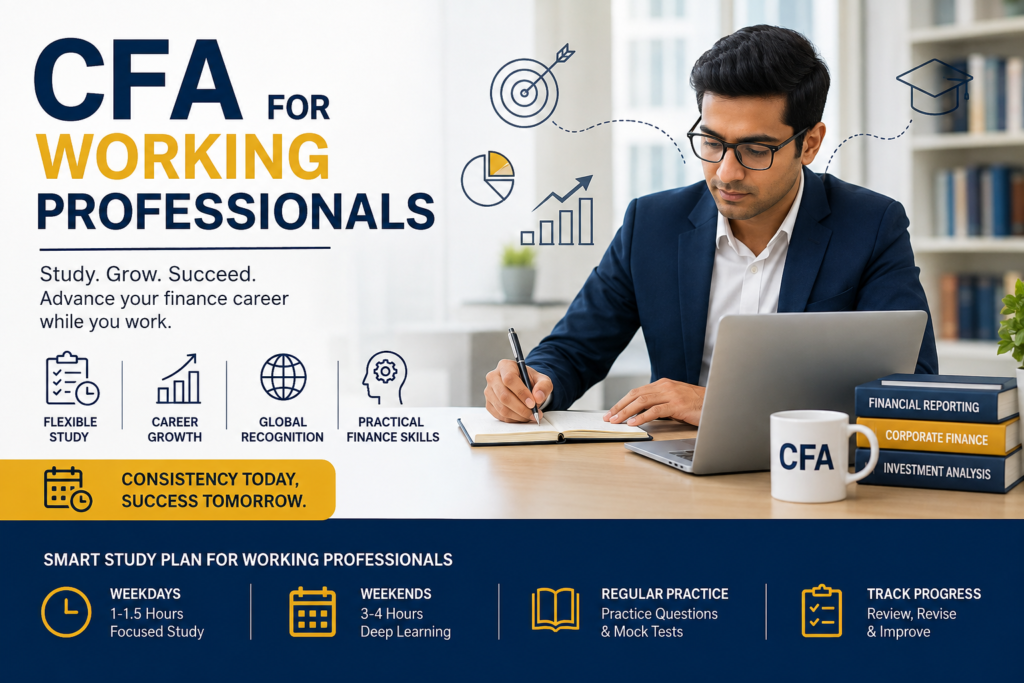
A simple weekly schedule can help you stay consistent:
| Day | Suggested Study Time |
|---|---|
| Monday–Friday | 1–1.5 hours/day |
| Saturday | 3–4 hours |
| Sunday | 3–4 hours |
You can adjust this schedule according to your working hours and exam timeline.
A Simple Preparation Strategy
1. Learn the Concepts
Understand the topic before moving to practice questions.
2. Practice Regularly
Solve questions after completing each topic.
3. Revise Weekly
Keep dedicated time for revision.
4. Take Mock Tests
Use mocks to identify weak areas and improve time management.
5. Track Your Progress
Monitor completed topics, practice questions, and mock-test scores.
Can CFA Help Working Professionals Switch to Finance? 🔄
Yes, CFA can support professionals looking to transition into finance, but CFA alone does not guarantee a job.
Depending on your target role, you may also need practical skills such as:
- 📊 Financial Modeling
- 💻 Advanced Excel
- 📈 Company Valuation
- 🧮 Financial Analysis
- 🗣️ Communication & Interview Skills
Potential career paths include investment banking, equity research, portfolio management, risk analysis, asset management, and wealth management.
Who Should Consider CFA While Working?
CFA can be relevant for professionals from different backgrounds, including:
- Banking professionals
- Financial analysts
- Accountants
- Corporate finance professionals
- Engineers moving into finance
- IT professionals interested in finance
- MBA professionals
- Investment and wealth management professionals
CFA Career Opportunities 💼
After developing relevant knowledge and experience, professionals can explore roles such as:
| Career | Key Responsibility |
|---|---|
| Financial Analyst | Financial analysis & forecasting |
| Equity Research Analyst | Company & stock analysis |
| Investment Banking Analyst | Valuation & transactions |
| Portfolio Analyst | Portfolio monitoring |
| Risk Analyst | Financial risk assessment |
| Wealth Manager | Investment & financial planning |
Is CFA Worth It for Working Professionals?
CFA can be worthwhile if your long-term goal is to build a career in investment analysis, equity research, portfolio management, wealth management, risk, or related finance fields.
However, the value of CFA depends on your career goals, existing experience, practical skills, and how you apply your knowledge professionally.
Tips for Managing CFA and a Full-Time Job 🎯
- ⏰ Create a fixed study schedule.
- 📱 Use short breaks for quick revision.
- 📚 Start preparation early.
- 📊 Track your weekly progress.
- 📝 Practice questions regularly.
- 🧠 Focus on weak topics.
- 😴 Don’t compromise excessively on sleep and recovery.
- 🎯 Keep your exam goal visible throughout your preparation.
Frequently Asked Questions
Can I pursue CFA while working full-time?
Yes. You can prepare for CFA alongside a full-time job by following a structured and consistent study schedule.
How many hours should I study for CFA while working?
A practical starting point is around 1–1.5 hours on weekdays and longer sessions on weekends. Your schedule should depend on your preparation timeline and prior knowledge.
Is CFA difficult for working professionals?
CFA can be challenging because you need to balance work and preparation. Starting early and maintaining consistency can make it more manageable.
Can CFA help me switch from IT to finance?
Yes, CFA can help build your finance and investment knowledge. However, practical skills such as financial modeling, Excel, valuation, and networking can also be important for a career transition.
Can I pursue CFA without leaving my job?
Yes. Many professionals prepare for CFA while continuing their employment.
Is CFA worth it after gaining work experience?
It can be valuable if you want to specialize in finance or move toward investment-related career opportunities.
Final Thoughts 🚀
The CFA for working professionals route can help you develop specialized finance knowledge without necessarily taking a career break.
The key is simple: start early, follow a realistic study plan, practice consistently, and balance CFA preparation with your professional responsibilities.