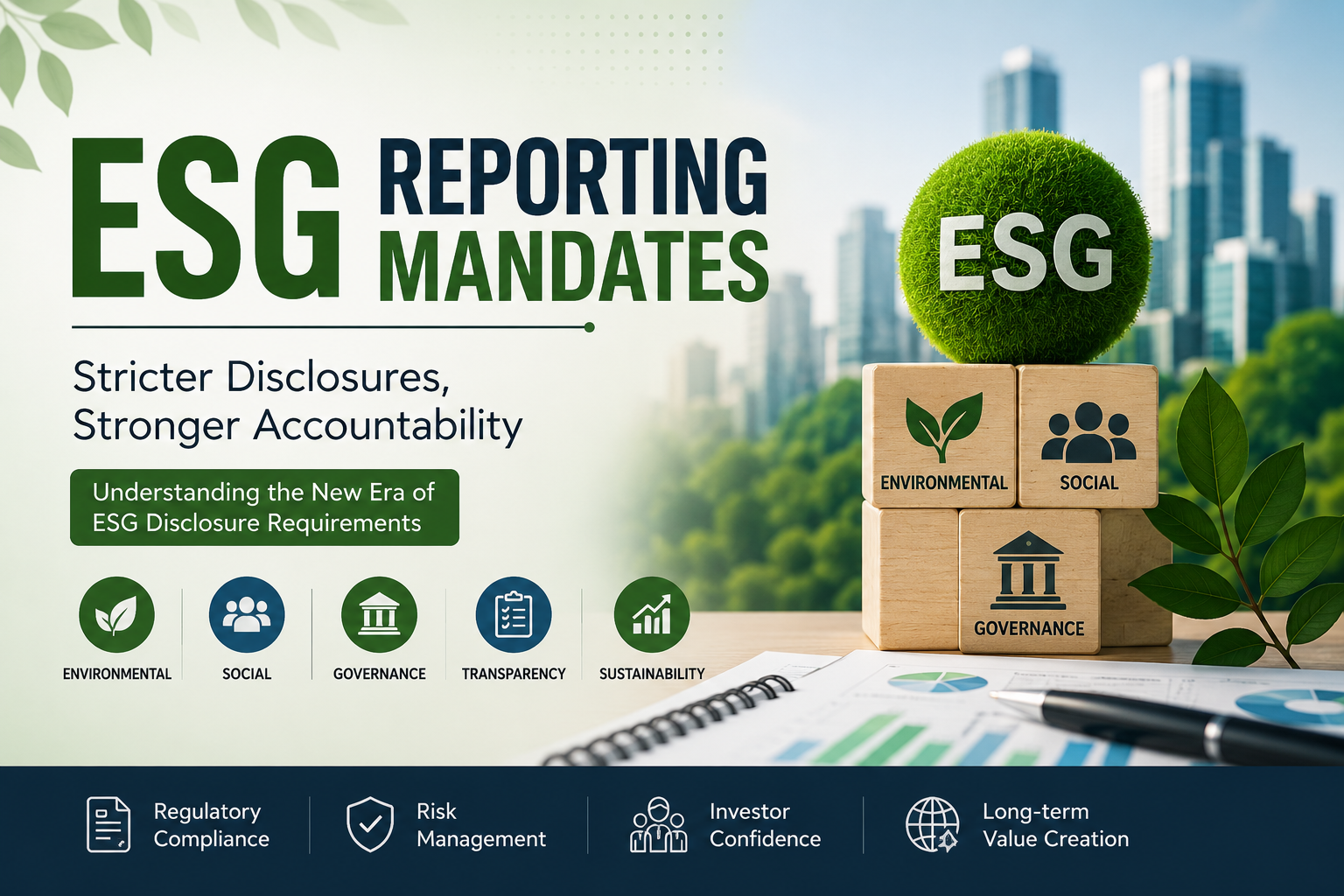
ESG reporting is becoming an increasingly important part of corporate reporting. Regulators around the world are introducing stricter ESG disclosure requirements to make sustainability information more transparent, measurable and reliable.
For companies, ESG is no longer just a voluntary sustainability initiative. It is increasingly becoming part of corporate reporting, risk management and financial decision-making.
What Are ESG Reporting Mandates?
ESG Reporting Mandates are rules that require eligible companies to disclose information about their:
- 🌱 Environmental impact
- 👥 Social and employee practices
- 🏢 Corporate governance
- 🌍 Climate-related risks
- 📊 Sustainability-related financial risks
The goal is to help investors and stakeholders understand how sustainability issues may affect a company’s business and long-term performance.
Why Are ESG Disclosure Requirements Becoming Stricter?
There are three major reasons behind the growing focus on ESG reporting:
1. Growing Investor Demand
Investors increasingly want to know how climate, social and governance risks could affect a company’s future performance.
2. Greenwashing Concerns
Companies are expected to support sustainability claims with reliable and measurable data, reducing the risk of misleading ESG claims.
3. Financial Impact of ESG Risks
ESG factors can influence:
Revenue → Costs → Risk → Cash Flows → Valuation
This is why ESG is becoming increasingly relevant to finance and investment decisions.
Major ESG Reporting Frameworks
Different countries and regions are developing their own ESG regulations and disclosure frameworks.
BRSR: ESG Reporting in India
In India, SEBI’s Business Responsibility and Sustainability Report (BRSR) provides a structured framework for ESG disclosures by applicable listed companies.
BRSR covers areas such as:
- Energy and emissions
- Water and waste management
- Employee practices
- Diversity
- Human rights
- Corporate governance
SEBI has also introduced BRSR Core, which focuses on selected key ESG indicators and assurance requirements for specified entities.
CSRD: ESG Reporting Requirements in the European Union
The Corporate Sustainability Reporting Directive (CSRD) expands sustainability reporting requirements for companies within its scope.
One important concept under the framework is double materiality — considering both:
How sustainability issues affect the company + How the company affects the environment and society.
ISSB Standards for Global ESG Disclosure
The International Sustainability Standards Board (ISSB) has developed global sustainability disclosure standards.
Two important standards are:
- IFRS S1 – Sustainability-related financial information
- IFRS S2 – Climate-related disclosures
These standards aim to improve consistency and comparability in sustainability-related financial reporting.
How ESG Reporting Is Changing for Companies
Modern sustainability reporting is becoming more data-driven.
Companies increasingly need to:
Collect → Verify → Report → Assure
This means businesses need reliable ESG data, clear ownership and stronger internal reporting processes.
Why ESG Matters for Finance Professionals
ESG is no longer limited to sustainability teams.
Finance professionals may increasingly work with:
- ESG data analysis
- Risk assessment
- Financial modeling
- Company valuation
- Corporate reporting
- Climate-related financial risks
For example, environmental regulations may increase operating costs or require additional capital expenditure. These changes can affect financial forecasts and company valuation.
The Future of ESG Reporting
The direction is clear: more transparency, better data and stronger accountability.
As ESG regulations continue to evolve, companies will need to improve how they collect, verify and report sustainability information.
For finance professionals, understanding ESG can become an important career skill because ESG factors can influence risk, cash flows, capital allocation and valuation.
Key Takeaway
ESG reporting is moving from voluntary disclosure toward more standardized and regulated reporting.
For businesses, this means stronger ESG data and reporting processes.
For finance professionals, it means understanding how sustainability factors connect with financial performance and valuation.
ESG is no longer just about sustainability — it is becoming part of financial decision-making.